Key Takeaways
- Providing clear, early communication about the relocation is the most effective way to mitigate fear and uncertainty in children.
- Involving your kids in the packing process gives them a much-needed sense of control during a time of significant transition.
- Maintaining familiar routines and creating structured goodbye rituals are crucial for your child's psychological adjustment.
- Partnering with professional removalists allows parents to focus entirely on supporting their family's emotional wellbeing on moving day.

Relocating to a new home is a major life event that can be just as stressful for children as it is for adults. As parents, managing the logistics of a relocation often consumes our attention, but it is critical to prioritise how we prepare your child for moving. Children thrive on predictability, and the sudden upheaval of their safe environment can trigger complex emotional responses. By using strategic, empathetic approaches grounded in child psychology, you can transform an overwhelming transition into an exciting family adventure. Here are six practical and emotional strategies to ensure a smooth, tear-free transition for your little ones.
1. Start the Conversation Early and Validate Their Feelings
Starting the conversation early involves discussing the upcoming move openly and honestly weeks in advance to help children process their emotions and mitigate separation anxiety in children.
-
Be transparent: Share the news as soon as it is confirmed, avoiding any sudden surprises.
-
Encourage questions: Create a safe, ongoing space for them to express their worries without judgment.
-
Validate, don't dismiss: Acknowledge their sadness about leaving without immediately forcing a positive spin on the situation.
When it comes to helping children cope with moving, timing and tone are everything. Springing a sudden move on a child can severely impact their trust and sense of foundational security. Instead, sit down as a family and explain the "why" behind the move in age-appropriate terms, whether it is for a new job, a larger backyard to play in, or to be closer to grandparents.
Experts in child psychology and emotional wellbeing emphasise that children need adequate time to grieve the loss of their current space. If your child expresses anger, frustration, or sadness, validate those feelings directly. Say things like, "It is completely normal to feel sad about leaving your bedroom," rather than instinctively saying, "Don't be sad, the new house is going to be so much better!" By giving them the psychological runway to process these complex emotions, you significantly reduce behavioural pushback and emotional outbursts as moving day rapidly approaches.
2. Read Children's Books About Relocating Together
Reading children's books about relocating together is a proven psychological method to translate the complex, abstract concept of moving into an accessible, comforting, and highly visual narrative.
-
Visualise the process: Storybooks help children accurately picture what packing boxes and moving trucks actually look like.
-
Normalise the emotions: Fictional characters in books show kids that feeling nervous or sad about a new home is completely normal.
-
Spark conversation: Use the storylines as gentle jumping-off points to discuss their own specific fears about the transition.
Standard paediatric advice on relocating frequently highlights bibliotherapy, the clinical use of books to help children solve personal problems and navigate trauma. For younger kids, understanding the timeline of a physical move is incredibly difficult. Reading age-appropriate stories featuring characters who successfully move to a new home helps bridge this massive cognitive gap.
Excellent tips for moving with a toddler often centre around this specific strategy, as toddlers and preschoolers respond best to visual cues, repetition, and routine. By reading these targeted stories together each night in the final weeks leading up to the transition, you establish a deeply reassuring narrative. It subtly teaches them that while the physical house is changing, the core family unit remains safe and intact, which is absolutely vital for minimising the stress of family routine disruption.
3. Involve Them in the Packing and Organising Process
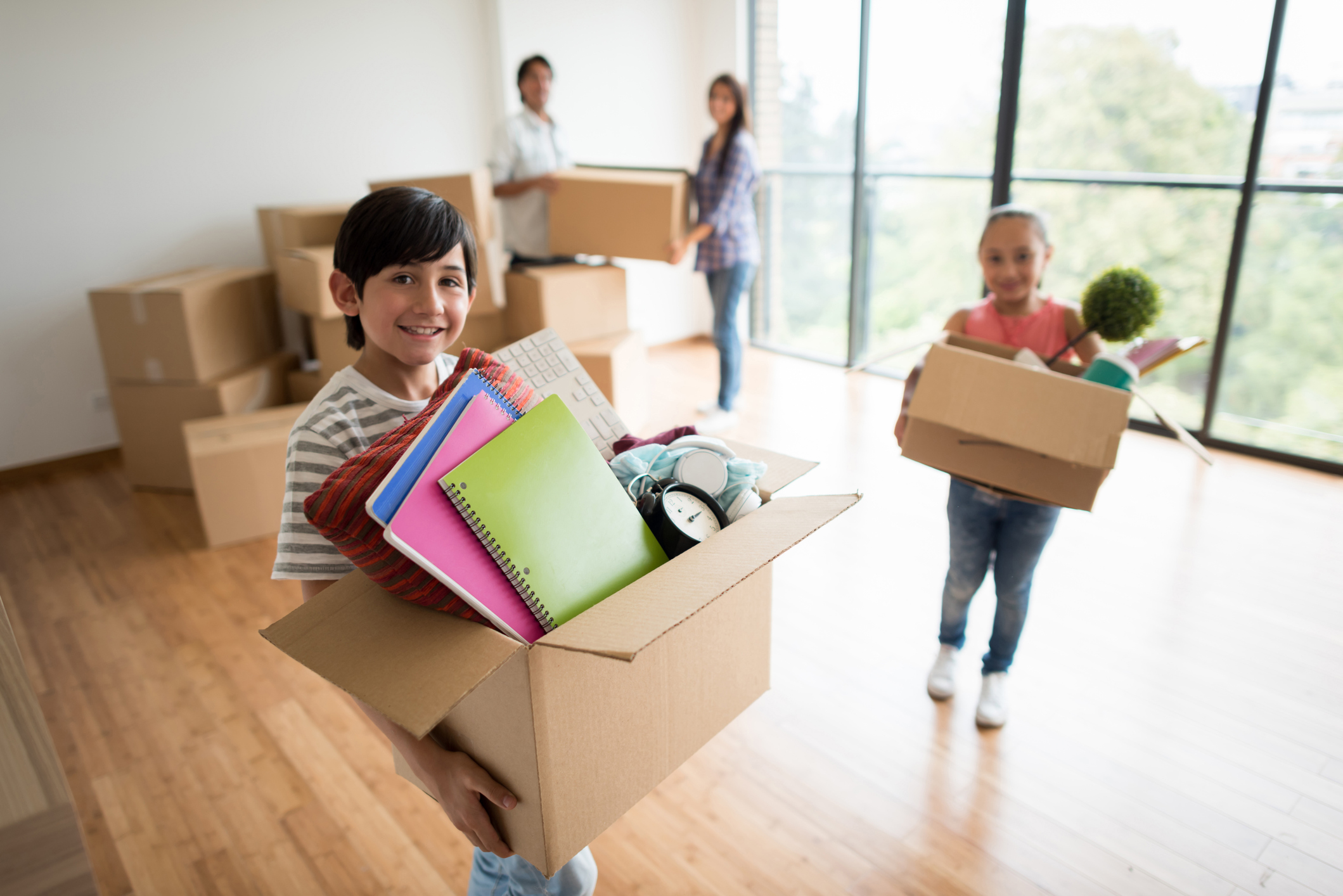
Involving children in the packing and organising process empowers them by providing a tangible sense of control over their personal space during a highly chaotic and unpredictable time.
-
Assign age-appropriate tasks: Let them safely tape up lightweight boxes or physically sort their soft toys.
-
Colour-code their belongings: Let them choose special coloured markers or fun stickers to label their own boxes.
-
Pack a personal bag: Have them actively select their favourite comfort items for the actual journey.
When packing kids bedrooms for a move, it is incredibly tempting for parents to do it quickly and efficiently while the children are asleep or away at school. However, waking up to find their sacred, safe space suddenly boxed away can be deeply traumatic for a child. Instead, turn packing into an interactive, family-focused activity. Let them declutter their own toys, deciding what beloved items come to the new house and what they have outgrown and can be donated to charity.
In our extensive experience with relocating families across Australia, we have seen firsthand that children who are actively engaged in the packing process exhibit significantly less distress on the actual moving day. A highly effective tactic is helping them pack a moving day essentials box. Let them fill a brightly coloured box or backpack with their favourite pyjamas, a comforting stuffed animal, healthy snacks, and a few familiar toys. Knowing exactly where their most prized possessions are provides immense psychological relief during the transit phase.
4. Familiarise Them with the New Neighbourhood and School
Familiarising your child with the new neighbourhood and school involves visiting the locations physically or virtually before the move to actively remove the paralyzing fear of the unknown.
-
Drive through the new area: Point out highly appealing local spots like parks, ice cream shops, and community playgrounds.
-
Tour the new school: Walk the physical grounds and arrange to meet their new teachers ahead of time.
-
Use virtual mapping: If moving interstate, use Google Street View to digitally "walk" around the new street and local area.
One of the most intensely intimidating aspects of moving house with kids is the sheer unpredictability of their new physical environment. You can drastically lower this baseline anxiety by actively making the "unknown" feel familiar. If you are moving locally, dedicate several weekend trips to exploring your new suburb together. Eat lunch at a local cafe, play at the nearby park, and deliberately establish positive associations with the area before you even unpack a single box.
School enrolment and familiarisation are particularly critical components; a child’s school is the absolute centre of their social universe. Arrange a formal meeting with the principal or a private tour of the empty classrooms so your child knows exactly what the front gates, the playground equipment, and their new teacher look like. If you are moving long-distance, utilise the internet. Look up vibrant photos of the town, research local sports clubs they can join, and talk enthusiastically about the specific weekend activities you can do once you finally arrive.
5. Plan a Meaningful Goodbye Ritual for Friends and Family
Planning a meaningful goodbye ritual provides essential psychological closure, allowing children to properly transition from their old environment to their new chapter without leaving emotional loose ends.
-
Host a farewell party: Keep the event simple and low-stress, allowing them to celebrate purely with close friends.
-
Create a memory book: Take physical photos of their absolute favourite spots in the current house and hometown.
-
Plan future contact: Set up specific, locked-in dates for video calls, online gaming sessions, or pen-pal letters.
Goodbye rituals and closure are fundamental requirements for healthy psychological transitions in children. When relocating with family, do not let the sheer logistical chaos of bubble wrap, cleaning, and moving trucks overshadow the critical need to say a proper farewell. A goodbye ritual certainly doesn't have to be an elaborate, expensive, or highly catered party; it can be as simple as a backyard pizza night with their best friends or taking a final, quiet walk through the empty house to deliberately say "thank you" and "goodbye" to each room.
Help your child build a physical scrapbook filled with printed photos of their current friends, their old bedroom setup, and their favourite local park. Most importantly, constantly reassure them that saying goodbye to a physical place does not mean saying goodbye to the people they love. Establish clear, actionable, and realistic plans for exactly how they will stay in touch with their friends, which gently helps pivot their mindset away from loss and toward future connection.
6. Book a Trusted Removalist to Help Prepare Your Child for Moving
Booking a trusted removalist to help prepare your child for moving means entirely outsourcing the heavy physical labour so you can focus 100% of your energy on your family's emotional and psychological needs.
-
Eliminate parental stress: Kids subconsciously absorb your stress; hiring professionals keeps your household calm.
-
Maintain family routines: Professional packing allows you to keep the daily household routine running normally for much longer.
-
Ensure physical safety: Keep curious children safely away from the severe hazards of heavy lifting and moving trucks.
The sheer logistics of shifting an entire household are undeniably exhausting. If you are spending the entire week depleted, stressed, and frantically loading heavy boxes, your children will immediately internalise and mirror that high-level anxiety. This is exactly where Chess Moving steps in as your ultimate relocation partner. By hiring AFRA-accredited removalists like our dedicated team, you are not just paying for a truck; you are actively buying back the invaluable time and mental bandwidth required to be emotionally present for your kids.
As one of Australia's most trusted, nationwide moving companies, Chess Moving brings decades of specialised experience to family relocations. Our highly trained crews operate with strict safety protocols and premium efficiency standards, ensuring the physical disruption to your home environment is severely minimised. While we seamlessly handle the heavy lifting, professional packing, and complex logistical problem-solving, you can sit quietly with your child, read their favourite book, or take them to the park to burn off nervous energy.
Don't let the physical exhaustion of moving overshadow this exciting new chapter for your family. Choose the experts who understand that we aren't just moving boxes; we are moving lives. Contact Chess Moving today to speak with our family relocation specialists and secure your comprehensive, obligation-free quote.
About the Author: The Chess Moving Team
The Chess Moving Team comprises highly trained, AFRA-accredited logistics specialists with decades of experience in residential, corporate, and international relocations. Operating a nationwide network across Australia, they are industry leaders committed to providing secure, efficient, and stress-free moving experiences tailored to the unique emotional and logistical needs of every family.